
Federal Budget Analysis
Welcome Cost of War Visitors
Thanks for visiting National Priorities Project's Cost of War Publications page. We're working to serve you better by combining our Cost of War publications with National Priorities Project's central website. You are being redirected to nationalpriorities.org/analysis, where you will find historical Cost of War publications along with a wealth of additional resources about the federal budget.
If you have any questions or need assistance locating a particular Cost of War report, please do not hesitate to contact us at info@nationalpriorities.org or 413-584-9556.
Tax Day 2024
April 3, 2024
It’s spring, and that means Americans are filing their tax returns. Most will know whether they get a refund, but how many know where their tax dollars really go?
Also Includes:
FACT SHEET: Invest in Communities, Not Violence
Nov. 9, 2023
For far too long, the U.S. has clung to a budget that prioritizes war, deportations and detentions, and policing at the expense of human needs. It’s time to reinvest these taxpayer dollars into real human needs — healthcare, education, housing, and a just energy transition to name a few. Here’s how legislators have splurged on militarism, and what could happen if those funds instead benefited people and communities.
More Military Aid to Israel Will Mean More Deaths
 Oct. 20, 2023
In the face of massive suffering in Gaza and disregard for international law by the Israeli government, the U.S. must not provide additional military aid or weapons that would cause more deaths. Instead, the U.S. should use its considerable diplomatic strength to call for an immediate ceasefire.
NPP at IPS Joins Calls for a Ceasefire in Israel and Occupied Palestine
Oct. 19, 2023
“A ceasefire is the only way to stop innocent suffering,” said Lindsay Koshgarian, Program Director of the National Priorities Project at the Institute for Policy Studies.
National Priorities Project Among 27 Organizations Urging Emissions Transparency in NDAA
 Aug. 14, 2023
The National Priorities Project joins other organizations in a letter addressed to Congress leaders demanding the removal of anti-climate provisions in the NDAA for Fiscal Year 2024.
The Warfare State: How Funding for Militarism Compromises Our Welfare
 May 24, 2023
Nearly two-thirds of the federal discretionary budget goes to militarized federal programs, leaving just over a third for our communities — a sliver some lawmakers want to cut even further.
Tax Day 2023
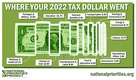 April 17, 2023
Tax Day this year is April 18, 2023. Americans will file their tax returns for all income received in 2022. Want to know what your taxes pay for, and who pays what?
Also Includes:
FY 2023 Budget Deal Rewards Military at Expense of Domestic Needs
Dec. 20, 2022
“This budget deal is shameful. It perpetuates the status quo, where domestic priorities never get equal footing with military spending. It’s unconscionable to keep throwing more money at Pentagon contractors when so many in this country are struggling needlessly,” said Lindsay Koshgarian, Program Director for the National Priorities Project at the Institute for Policy Studies.
FACT SHEET: No National Security without Climate Security
Sept. 29, 2022
Climate change represents arguably the biggest threat to U.S. national security - and human security - of the 21st century. Decades of inaction have led to worsening and more frequent extreme weather events, with associated loss of life and property. And yet in Washington, “national security” is still primarily synonymous with military approaches to geopolitical challenges.
Tax Day 2022
 April 15, 2022
Tax Day this year is April 18, 2022. Americans will file their tax returns for all income received in 2021. Want to know what your taxes pay for, and who pays what?
Also Includes: